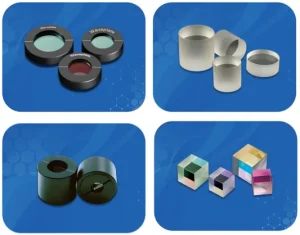
Optical element ,Filter,Lens,window,IR,UV,MWIR ,LWIR,imaging AI ,AI vision , Zoom camera ,high resolution camera
Optical element ,coating wave length oprtical elements ,Filter,Lens,window,IR,UV,MWIR ,LWIR,imaging
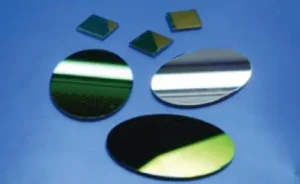
— A metal mirror is an optical component with a metallic coating on one side of the glass that
directly reflects the incident light. Reflectance is insensitive to the angle of incidence and polarization state, with
an ultra-wide wavelength bandwidth.
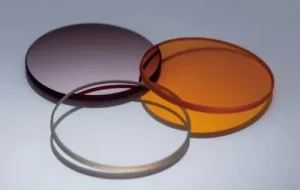
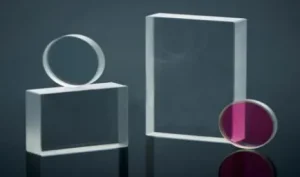
— Windows are widely used as protective devices wave length filter for electronic sensors,optoelectronics , optical lenses,imaging , vision , and laser
lenses for various wavelength bands. Coatings can be applied per customer requirements.
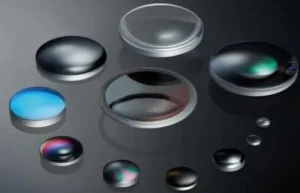
Main products: plano-convex, plano-concave, biconvex, meniscus, small ball lenses, rod lenses, and cylindrical lens
Optical Filters — Optical filters are devices used to select a desired radiation band. In industrial applications,
they are commonly used to obtain a beam of a specific band. Filters are divided into: color filters and thin-film
filters.
Dichroic Mirrors — Dichroic mirrors, also known as two-color mirrors, are commonly used in laser technology and optoelectronics
Dichroic mirrors and beamsplitters transmit or reflect light according to wavelength, achieving spectral also optoelectronics
separation. Customizable per customer requirements
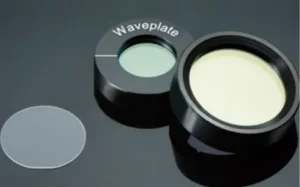
wavelength wave plates, mid-infrared zero-order wave plates, etc.
our wedge-type depolarizers use quartz crystal for optical-path polarization compensation, avoiding
the limitation of ordinary wedge-type depolarizers, which can only be used in a narrower spectral range due to
beam deviation angle constraints
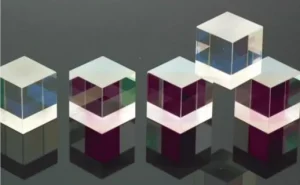
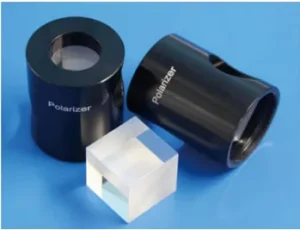
A polarizing beamsplitter cube splits incident unpolarized light into two perpendicular linearly polarized beams.
The P-polarized light passes through completely, while the S-polarized light is reflected at a 45° angle, emerging
at 90° to the P beam. The cube is made by cementing a pair of high-precision right-angle prisms, with a
polarizing dielectric coating on the hypotenuse of one prism.
Dielectric Mirror — High reflectance, sensitive to angle of incidence, wide working wavelength range.
Polarizers are mainly used to separate the P-polarized and S-polarized components of a specific wavelength. Due to their high damage threshold, they are commonly used in high-energy laser systems.
[Glan Polarizers] Glan-Taylor, Glan-Laser, Glan-Thompson, Brewster, Wollaston, Rochon, etc.
[Polarizers] Linear polarizers, 45°/56° polarizing beamsplitting plates, nanoparticle wire-grid polarizers, etc.
[Glan Polarizers] Glan-Taylor, Glan-Laser, Glan-Thompson, Brewster, Wollaston, Rochon, etc.
[Depolarizers] Achromatic depolarizers, wedge-type depolarizers, etc.
Right-Angle Mirror — For optical path adjustment; internal reflection; external reflection deflects the beam by
90°.
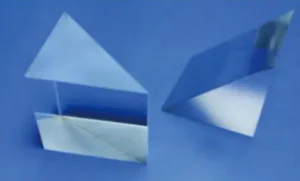
Right-Angle Prism — Right-angle prisms are commonly used to achieve 90° and 180° beam redirection.
Dove Prism — Dove prisms are commonly used to rotate an image and can also be used to redirect a beam by
180°.
Windows — Windows are widely used as protective devices wave length filter for electronic sensors,optoelectronics , optical lenses,imaging AI , AI vision , and laser
lenses for various wavelength bands. Coatings can be applied per customer requirements.
Main products: plano-convex, plano-concave, biconvex, meniscus, small ball lenses, rod lenses, and cylindrical